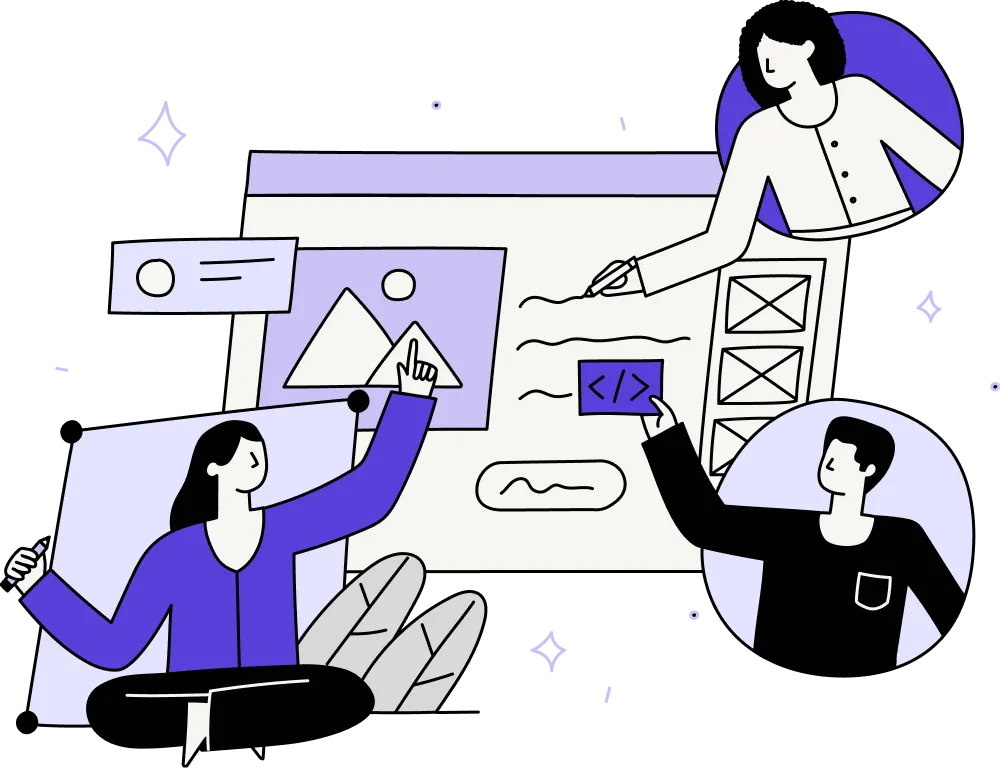
What is product design and why does it matter for business success?

Product design plays a central role in how successful products are built.
Product design plays a central role in how successful products are built.
At its core, product design is about turning ideas into something that works for both the business and the people using it. It connects what a company is trying to achieve with what users actually need, shaping products that are useful, usable, and valuable.
It’s not just about how something looks. It’s about how it works, how it feels to use, and whether it solves the right problem in the first place.
What product design actually does
Product design sits at the intersection of user needs, business goals, and technology.
It involves understanding how people behave, identifying opportunities to improve their experience, and shaping solutions that are both practical and commercially viable. This can include research, problem definition, prototyping, testing, and refining how a product works over time.
Rather than jumping straight to solutions, product design helps teams slow down just enough to make better decisions. It creates clarity around what should be built, before time and effort are invested in building it.
Why product design matters for business success
When product design is embedded into how decisions are made, it has a direct impact on outcomes.
Products become easier to understand and quicker to adopt. Users can complete tasks more efficiently, which improves engagement and long-term retention. Internally, teams spend less time revisiting decisions or fixing issues later.
The result is not just a better experience, but a more efficient way of working.
Strong product design reduces risk. It helps teams focus on the right problems, test ideas earlier, and move forward with more confidence.
How product design improves product development
One of the biggest benefits of product design is the clarity it brings to the development process.
Instead of moving straight from idea to build, teams take time to explore different approaches, validate assumptions, and understand potential trade-offs. This leads to better prioritisation and more focused delivery.
It also improves collaboration. Product, design, and engineering work from a shared understanding of the problem and the desired outcome, rather than working in silos.
Over time, this creates a more consistent and predictable way of delivering value.
What good product design looks like in practice
In practice, product design is not a single step or phase. It’s an ongoing part of how teams work.
It shows up in how clearly problems are defined, how early ideas are tested, and how confidently decisions are made. It’s visible in products that feel intuitive to use, where the experience aligns naturally with what users are trying to achieve.
And importantly, it’s reflected in outcomes. Strong adoption, positive feedback, and products that continue to evolve based on real insight.
A simple way to think about product design
A useful way to think about product design is as a decision-making tool.
It helps teams answer three key questions:
- what problem are we solving?
- what’s the best way to solve it?
- and how do we know it’s working?
By grounding decisions in these questions, product design helps ensure that effort is focused in the right place.
Looking to create products that are easier to use and deliver stronger results?
We help businesses use product design to bring clarity to decision-making and build products that truly work for their users.
👉 Book a call with our team to talk about how we can help.
Are you wondering...
Product design helps define the problem, shape how a product works, and ensure it meets user needs. It’s not just about visuals, it’s about making decisions that improve usability, adoption, and overall product success.
The most common outcome is rework. Features may be built without fully understanding the problem, leading to changes later that are more complex and costly to fix.
No. While visual design is part of it, the core of product design is understanding user behaviour, solving problems, and shaping how a product works in practice.
As early as possible. Design should be involved in defining the problem and exploring solutions before development begins, not just refining the final output.
By involving design in decision-making, not just execution. This means using design thinking to define problems, test ideas early, and align teams around user needs and business goals.
More insights
PM, designer or product builder? How AI is reshaping product team roles
Need help delivering at pace whilst maintaining product integrity?
We help B2B product teams rebalance pace and purpose — designing workflows where speed serves strategy instead of undermining it. Book a call to talk about how we can help you deliver your product's vision.