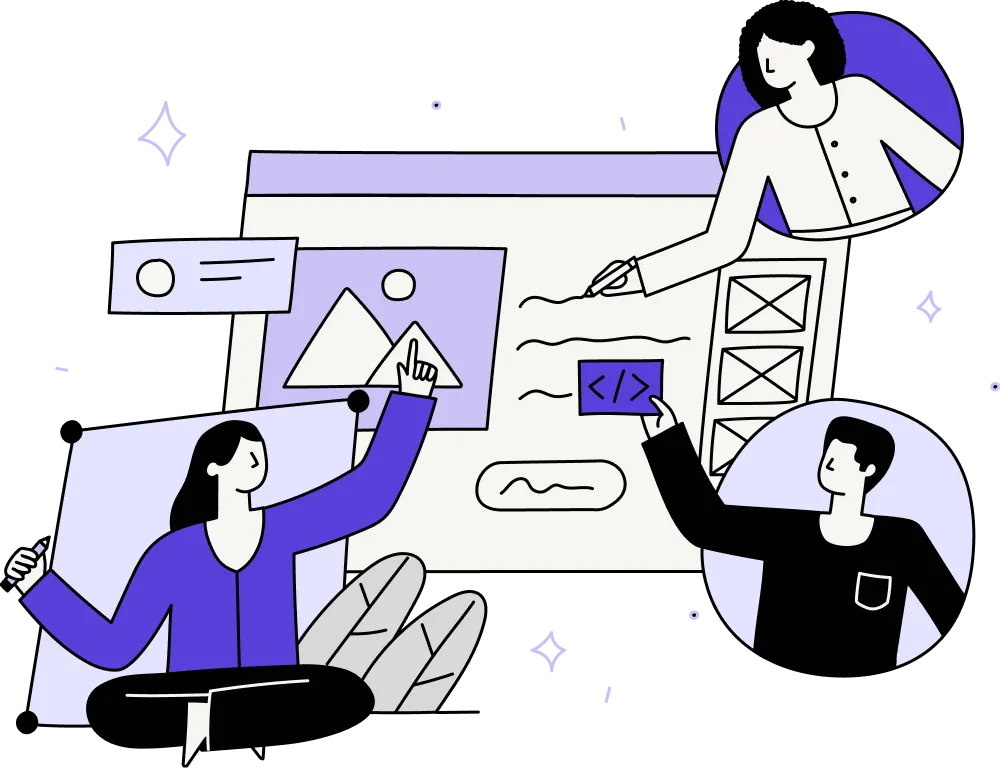
Balancing long-term product strategy with short-term demands


There’s a long-term strategy in place. A roadmap, a vision, a sense of where the product is heading. But at the same time, there’s a constant stream of short-term demands. Customer feedback, urgent issues, stakeholder requests, market shifts. And the tension between the two is hard to manage.
This is one of the most common challenges we see across product teams.
There’s a long-term strategy in place. A roadmap, a vision, a sense of where the product is heading. But at the same time, there’s a constant stream of short-term demands. Customer feedback, urgent issues, stakeholder requests, market shifts. And the tension between the two is hard to manage.
It’s not a failure of product teams. It’s the reality of building products in a live environment. But what we often see is that businesses struggle to find the balance.
The two extremes
When this tension isn’t managed deliberately, teams tend to drift towards one of two extremes.
On one side, there are teams that stay rigidly focused on the roadmap. They continue to push forward with the strategy, even when user feedback or market signals suggest something isn’t quite right. The thinking is often that staying the course will pay off in the long run. But the risk is that the product becomes disconnected from reality.
On the other side, there are teams that react to everything. Customer feedback comes in, issues arise, priorities shift, and the roadmap is constantly adjusted. Work gets reprioritised week to week, sometimes day to day. It feels reactive. But over time, it creates a different problem. The product loses direction. There’s no real sense of progress, just constant movement.
Why this balance is so difficult
The challenge is that both sides are understandable. Ignoring feedback is risky. But so is abandoning your strategy every time something changes.
The result is often a kind of oscillation between the two. Teams push forward, then react, then try to reset, then react again. And in the process, the bigger picture gets lost.
What good looks like
The teams that handle this well don’t treat it as a trade-off. They structure for it.
One of the simplest ways to think about this is in terms of two tracks.
1. A long-term track
This is where strategy lives.
It focuses on:
- bigger product bets
- long-term value
- meaningful improvements
This work should be protected. It shouldn’t be constantly disrupted by short-term noise.
2. A short-term track
This is where responsiveness lives.
It focuses on:
- user feedback
- bugs and issues
- smaller improvements
- immediate needs
This work is expected to change. That’s the point.
The key is not choosing between them, but acknowledging that both need to exist, and designing your way of working around that reality.
Why this matters at a business level
When the balance is wrong, the impact is felt quickly.
If a business focuses too heavily on long-term strategy without adapting to feedback, it risks building something that doesn’t reflect what users actually need.
If it focuses too heavily on the short term, it risks losing direction entirely.
And while the team is busy reacting, competitors are moving forward with more deliberate, strategic progress.
The real challenge: making deliberate decisions
This isn’t about creating the perfect process.
It’s about making deliberate decisions about where time and effort are being spent.
Being clear on:
- what needs to move forward regardless
- what needs to adapt
- and what can wait
Without that clarity, everything starts to feel urgent, and everything starts to compete for attention.
A better way to think about it
Balancing short-term and long-term isn’t something you solve once. It’s something you manage continuously. The goal isn’t to eliminate the tension.
It’s to structure for it, so that:
- you can respond to reality
- without losing sight of where you’re going
Struggling to balance immediate product demands with long-term strategy?
We help businesses create the clarity and structure needed to move forward without losing direction.
👉 Book a call with our team to talk about how we can help.
Are you wondering...
The key is not choosing between them, but structuring for both. Strong teams create separate tracks: one focused on long-term strategic work, and another dedicated to short-term needs like user feedback and issues. This allows businesses to stay responsive without losing direction.
The product can become disconnected from reality. Teams may continue building against a roadmap that no longer reflects user needs or market changes, leading to poor adoption and wasted effort.
You lose direction. Constantly reacting to feedback and issues can result in a fragmented product, with no clear progress toward meaningful outcomes. Over time, competitors with stronger strategy move ahead.
This typically sits with product leadership, such as the CPO or Head of Product. Their role is to create clarity on priorities, protect long-term work, and ensure the team remains responsive without becoming reactive.
More insights
PM, designer or product builder? How AI is reshaping product team roles

Need help delivering at pace whilst maintaining product integrity?
We help B2B product teams rebalance pace and purpose — designing workflows where speed serves strategy instead of undermining it. Book a call to talk about how we can help you deliver your product's vision.